Review ownership, contract and use in an orderly manner

Guide to property law in Morocco

Property law in Morocco: a clear guide for buyers to forms of ownership, the land register, powers of attorney, preliminary contracts, the notary, use and handover.

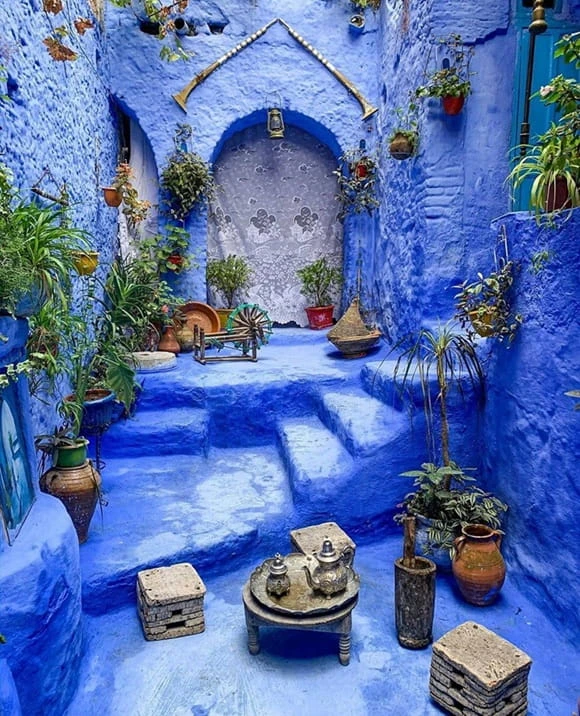
Detail of Moroccan architecture as a background for legal property due diligence

Direct answer

A clear explanation of the guide to property law in Morocco

Property law in Morocco should always be explained in relation to the specific property and current documents. The decisive factors are the form of ownership, title, seller’s identity, encumbrances, land category, visible existing structures and proposed contract. Concepts from Germany or other countries cannot simply be transferred. A land-register entry is an important basis, but technical quality, permitted use and personal tax consequences are separate questions. The Moroccan notary conducts the legal transaction and explains which evidence, conditions and payments are required in the individual case.

This guide provides general orientation, not legal advice. It helps buyers identify the right documents and questions in good time. DACHMA can request seller documents, clarify translation requirements and coordinate appointments with the notary or other specialists. Binding interpretation, drafting of contracts and legal consequences remain the responsibility of appropriately qualified advisers. The aim is a documented process in which no payment or signature is based solely on verbal assurances.

Official guidance: ANCFCC – Land register and cadastre . The linked body does not replace an individual review.

Review points

Five decisions that make the difference

01

Understand the form of ownership and title

Registered title enables a registry-based review of the owner, property description and registered rights. Other, sometimes more complex forms may also occur. Buyers have the exact status explained and examine which steps are possible and necessary for a secure acquisition. A brochure term such as condominium or plot of land does not replace this legal classification.

02

Review the seller and powers of attorney

The person selling must have the legal authority to dispose of the property. Identity, family or corporate connections and required consents are clarified using appropriate documents. Where a power of attorney is used, the notary checks its form, scope, validity and possible restrictions. Buyers should make no payments to representatives whose authority has not been clearly confirmed.

03

Formulate the preliminary agreement and conditions carefully

A reservation or preliminary contract may already create material obligations. The ownership review, financing, technical findings, vacant possession or missing documents belong in the process as clear conditions where legally appropriate. Deadlines, withdrawal consequences, down payments and recipients are recorded in understandable terms. A contract in a foreign language is explained in full before signing and translated professionally where necessary.

04

Reconcile the construction status and legal existing structures

The land register and contract do not automatically answer whether an extension, additional storey, terrace or change of use is documented. The visible existing structures, plans and available permits are compared. Technical and planning-law specialists assess discrepancies. Buyers thus separate the question ‘Who owns it?’ from ‘What was actually and permissibly built?’

05

Coordinate payment, registration and handover

The deposit, balance of the purchase price, official steps, keys and transfer of possession receive a coordinated sequence. The notary explains which safeguards and evidence apply. At handover, meters, inventory, keys, condition and outstanding works are recorded. Key handover alone does not prove completed transfer of ownership; legal completion remains decisive.

Process

From the initial objective to a regulated next step

01

Clarify the objective and budget

For the ‘property law in Morocco’ project, intended use, region, property type, timeframe and total costs are defined in writing.

02

Narrow the search area

Determine micro-locations, everyday life, exclusion criteria and realistic alternatives.

03

Listings and viewing

Pre-filter information, consolidate appointments and document observations in a traceable manner.

04

Price and documents

Negotiate terms and have ownership, encumbrances, construction, use and costs reviewed separately.

05

Contract and payment

Coordinate the notary, specialist advisers, bank, deadlines, payment route and handover unambiguously.

06

Handover and management

Organise keys, the report, utilities, defects, inspections and letting as needed.

State risks realistically

What must be clarified before making a commitment

Legal risks arise from unclear forms of ownership, outdated registry extracts, unconfirmed powers of attorney, encumbrances, discrepancies in area or inadequately worded conditions precedent. Language misunderstandings can obscure obligations. At the same time, a positive legal finding must not be confused with a defect-free building or profitable use. The process therefore requires separate legal, technical, tax and financial reviews that converge in a shared timetable.

Professional limitations remain visible

Due diligence and coordination reduce information gaps. They replace neither individual review nor the responsibility of the relevant specialists.

Next step

Submit a qualified enquiry

Give the selected notary the exact property address, available title and seller documents, intended use, payment route and all drafts. Maintain a list of outstanding points with the responsible party and deadline. DACHMA can coordinate follow-up requests, viewings, translation and specialist appointments. A binding declaration is made only once the legal status and payment process are understood and technical risks have been consciously assessed.

Submit the search profile

Decision-making in practice

Questions before committing: Guide to property law in Morocco

A sound purchase process combines several perspectives. A financially appropriate price is insufficient if ownership, use or condition remains unresolved. Conversely, a legally sound property does not automatically become the right choice if the location, everyday life and ongoing costs do not suit the buyer. Facts, assumptions and personal preferences are therefore documented separately.

Before making a reservation, it should be clear which documents are already available, which reviews remain open and who will undertake them. Every assurance receives a source or remains expressly marked as an assumption. This applies particularly to rental potential, renovation, construction progress, permissions and future infrastructure. Decisions under artificial time pressure do not fit this approach.

What DACHMA contributes specifically

DACHMA structures German-language communication, assists with selection and viewings, prepares negotiation and due-diligence questions, and coordinates agreed steps through to handover. The responsibility of external specialists remains visible. The buyer therefore knows who made a statement and what its scope is. This transparency is more important than a blanket promise that everything has been ‘verified’.

How a decision is documented

For serious candidates, advantages, unresolved points, costs, documents, responsibilities and deadlines are brought together. A decision follows only when material risks are understood. This may mean requesting further documents, commissioning a technical inspection, renegotiating terms or stepping away from a property. Ending the process can also be a good outcome.

Sources and professional limitations

Information as at 19 July 2026. The following bodies provide general guidance on the land register, notarial matters, finance or the respective location.

The information provides guidance and does not replace individual notarial, legal, tax, technical or financial advice.

Frequently asked questions

Frequently asked questions: Guide to property law in Morocco

Do I need a notary when buying property in Morocco?

The Moroccan notary is central to a legally sound structure and the required processes. The notary should be involved early, not only at signing.

What does a land title show?

It can document the owner, property designation and registered rights. The notary reviews whether it is current, whether the details correspond and any further transaction issues.

Is a preliminary contract already binding?

It can trigger material obligations. The content, conditions, payment and consequences of withdrawal must therefore be explained legally before signature.

Can I buy using a power of attorney?

That may be possible if the form and content are suitable for the intended transaction. The notary confirms the requirements in advance.

Does the notary also inspect construction defects?

No. Technical quality requires a separate assessment by qualified specialists. Legal and structural findings complement one another.

What belongs in a handover report?

Condition, keys, meters, inventory, documents, known defects and agreed work should be documented with the date and, where possible, photographs.

Geographical orientation

Choose a Moroccan city to suit your daily life

The cities are positioned using their geographical coordinates. The High Atlas is marked as a landscape region, while Midelt lies farther east at the transition between mountain regions.

Compare all locations Boundary geometry: Natural Earth · no external map trackers
Map of Morocco showing selected cities and the High AtlasGeographically projected orientation map showing Tangier, Tetouan, Rabat, Casablanca, Meknes, Fez, Midelt, Marrakech, Essaouira and Agadir.High AtlasTangierTetouanRabatCasablancaMeknesFezMideltMarrakechEssaouiraAgadir
Moroccan garden with a reflecting pool behind the property enquiry

Personal initial consultation

Ready to find your property in Morocco?

Send your profile in just a few steps – confidentially, in a structured format and with personal attention.

Start an enquiry

Non-binding enquiry · No guarantee regarding returns, legal matters or tax · Reply usually within 1–3 working days

Enquire now!