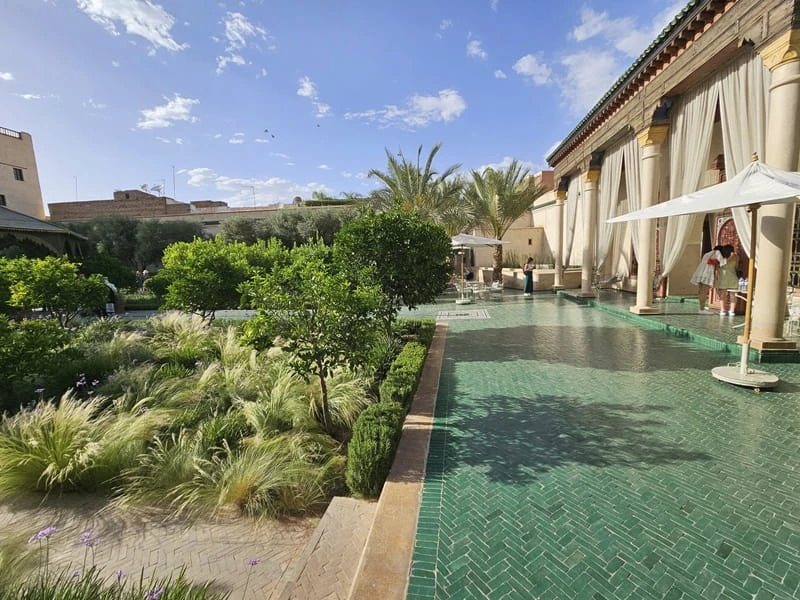
Moving to Marrakech

Moving to Marrakech: housing, daily life and property

Plan a move to Marrakech realistically: neighbourhoods, a trial period, daily life, renting or buying, property checks, residence status and local organisation.

Residential surroundings in Marrakech with views of the High Atlas for a planned move

Direct answer

Moving to Marrakech: a clear guide to housing, daily life and property

Anyone planning to move to Marrakech should consciously separate the holiday experience, permanent daily life and a property decision. Heat, traffic, neighbourhood, journeys to schools and healthcare, language, residence matters and the choice between renting, an apartment, a riad or a villa all change the daily routine considerably. A trial period in the preferred micro-location is therefore more valuable than a quick purchase decision after only a few viewings.

This city guide connects a move to Marrakech with a realistic housing strategy. It explains decisions and responsibilities but does not replace residence, legal, tax or healthcare advice. Before making a lasting decision, personal priorities, available local services and unresolved specialist questions are recorded separately in writing. This makes clear what has already been experienced, which assumptions still need checking and which next step is genuinely useful.

Official guidance: Embassy of the Kingdom of Morocco—entry and residence . The linked body does not replace an individual review.

Review points

Five decisions that make the difference

01

Test the neighbourhood in daily life

Gueliz, Hivernage, the medina, Targa, the Palmeraie and outlying areas differ in journey times, tranquillity, heat, access and the density of local services. The preferred area should be experienced in the morning, evening and on ordinary working days.

02

Consider renting before buying

A fixed-term rental period shows whether the climate, traffic, social routines and desired lifestyle are suitable in the long term. A later purchase can then be based on experience rather than holiday impressions.

03

Choose the right type of home

A modern apartment requires different arrangements from a riad in a historic building or a villa with a pool, garden and security. Upkeep and local support belong in the search brief from the outset.

04

Clarify residence status and documents

Buying property does not automatically establish a right of residence. Current requirements, deadlines and personal consequences are checked with the relevant authorities before the move.

05

Plan for heat and mobility

Air conditioning, shade, water, access routes, parking and accessibility are not secondary details. They determine whether the property also functions beyond a short stay.

Process

From the initial objective to a regulated next step

01

Clarify the lifestyle model

Duration of stay, residence, budget, health, family and preferred everyday life are described specifically.

02

Check the official rules

Residence, insurance, taxes and documents are clarified with the competent bodies and specialists.

03

Test the region in everyday life

Climate, routes, amenities, language and residential areas are experienced outside holiday mode too.

04

Choose the form of housing

Renting, buying, an interim solution and subsequent management are compared without artificial time pressure.

05

Prepare the move

Documents, contracts, banking routes, utilities, transport and local contacts are organised.

06

Support with settling in

Practical processes, service providers and the new living situation are stabilised step by step.

State risks realistically

What must be clarified before making a commitment

The greatest risk when moving to Marrakech is treating an intense travel experience as proof of a sustainable daily life. A prestigious property may be unsuitable because of distance, maintenance, noise, heat or a lack of local support. Statements about residence, tax, letting or permissions must be checked using current information and the individual's circumstances; a purchase contract does not replace these checks.

Professional limitations remain visible

Due diligence and coordination reduce information gaps. They replace neither individual review nor the responsibility of the relevant specialists.

Next step

Submit a qualified enquiry

Describe your preferred neighbourhood, household size, residence arrangements, budget, preferred type of home and planned trial period. DACHMA can organise the housing and property steps and clearly identify the responsible specialist bodies.

Submit the search profile

Decision-making in practice

Questions before making a commitment: moving to Marrakech, daily life and property

A sound purchase process combines several perspectives. A financially appropriate price is insufficient if ownership, use or condition remains unresolved. Conversely, a legally sound property does not automatically become the right choice if the location, everyday life and ongoing costs do not suit the buyer. Facts, assumptions and personal preferences are therefore documented separately.

Before making a reservation, it should be clear which documents are already available, which reviews remain open and who will undertake them. Every assurance receives a source or remains expressly marked as an assumption. This applies particularly to rental potential, renovation, construction progress, permissions and future infrastructure. Decisions under artificial time pressure do not fit this approach.

What DACHMA contributes specifically

DACHMA structures German-language communication, assists with selection and viewings, prepares negotiation and due-diligence questions, and coordinates agreed steps through to handover. The responsibility of external specialists remains visible. The buyer therefore knows who made a statement and what its scope is. This transparency is more important than a blanket promise that everything has been ‘verified’.

How a decision is documented

For serious candidates, advantages, unresolved points, costs, documents, responsibilities and deadlines are brought together. A decision follows only when material risks are understood. This may mean requesting further documents, commissioning a technical inspection, renegotiating terms or stepping away from a property. Ending the process can also be a good outcome.

Sources and professional limitations

Information as at 19 July 2026. The following bodies provide general guidance on the land register, notarial matters, finance or the respective location.

The information provides guidance and does not replace individual notarial, legal, tax, technical or financial advice.

Frequently asked questions

Frequently asked questions: moving to Marrakech, daily life and property

Which neighbourhood is suitable for living in Marrakech?

That depends on daily journeys and the preferred density. Gueliz is urban, Targa more residential, the medina particularly characterful and outlying areas more land-intensive. Several trials of daily life are sensible.

Should I rent before buying?

Often, yes. A rental period reduces time pressure and reveals the climate, traffic, neighbourhood and real journeys without already being tied to a property.

Does owning a property give me a right of residence?

Not automatically. Ownership and residence status are separate matters; current requirements must be confirmed by the relevant Moroccan authority or suitably qualified adviser.

Is a riad suitable for permanent daily life?

It can be suitable, but access, stairs, the roof, damp, noise, maintenance and any tourist use need closer examination than they would in a modern apartment.

Which ongoing costs are important?

In addition to housing, the budget should cover energy, water, mobility, insurance, maintenance, community charges, staff or property management and reserves. Firm amounts depend on the property and the individual.

Can DACHMA manage the entire relocation?

DACHMA can coordinate agreed local steps and the property search. Legal, tax, residence, financing and healthcare matters remain with the appropriately qualified bodies.

Geographical orientation

Choose a Moroccan city to suit your daily life

The cities are positioned using their geographical coordinates. The High Atlas is marked as a landscape region, while Midelt lies farther east at the transition between mountain regions.

Compare all locations Boundary geometry: Natural Earth · no external map trackers
Map of Morocco showing selected cities and the High AtlasGeographically projected orientation map showing Tangier, Tetouan, Rabat, Casablanca, Meknes, Fez, Midelt, Marrakech, Essaouira and Agadir.High AtlasTangierTetouanRabatCasablancaMeknesFezMideltMarrakechEssaouiraAgadir
Garden and reflecting pool in Marrakech behind the property enquiry

Personal initial consultation

Ready to find your property in Marrakech?

Send your profile in just a few steps – confidentially, in a structured format and with personal attention.

Start an enquiry

Non-binding enquiry · No guarantee regarding returns, legal matters or tax · Reply usually within 1–3 working days

Enquire now!