Traditional property type

Buying a riad in Marrakesh with respect for the building, access and use

Buying a riad in Marrakech: review ownership, medina access, the roof, moisture, alterations, use, renovation and ongoing operation.

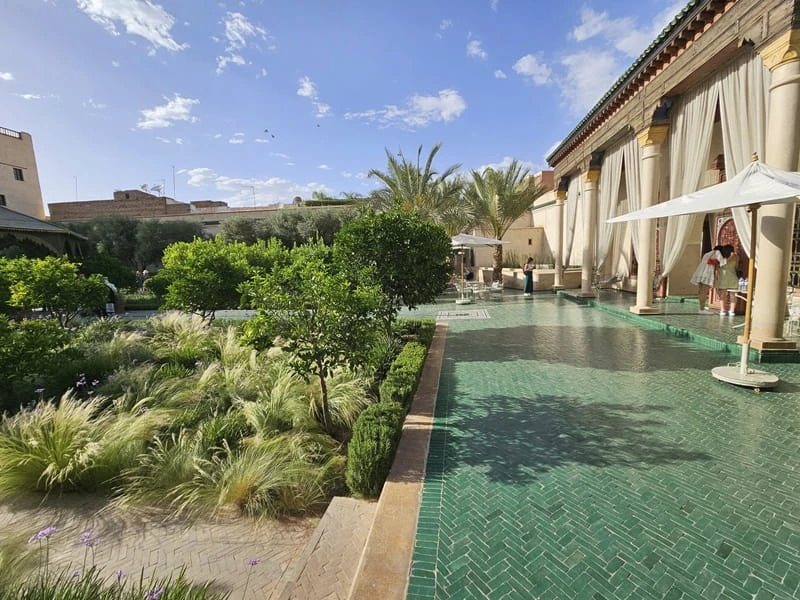
Traditional riad courtyard in Marrakech with handcrafted details

Direct answer

A clear explanation of buying a riad in Marrakesh with respect for the building, access and use

A riad in Marrakesh is more than a house with a decorative courtyard. Its quality depends on the plot and ownership, access, roof, drainage, load-bearing structure, pipes, ventilation and documented alterations. Intended use also determines the review requirements: a private second home needs different processes from a house with guests or a professional accommodation business. The medina makes some transport and repairs more difficult, but offers a form of living that a modern apartment cannot replace. Buyers should consider character and effort together and should not infer assumptions about letting or permissions from how the property has previously been presented.

This page is intended for buyers who deliberately seek traditional building fabric and wish to plan renovation and operation realistically. DACHMA can coordinate the property shortlist, access appointments, document overview and specialist inspections. A notary or legal adviser reviews ownership and the contract; suitable specialists assess the roof, load-bearing structure, moisture and technical systems. Restoration, features and use are planned separately. This keeps a riad a personal architectural decision rather than presenting it as an automatic investment product.

Official guidance: ANCFCC – Land register and cadastre . The linked body does not replace an individual review.

Review points

Five decisions that make the difference

01

Plot and house identity

The riad viewed, its area, boundaries, storeys, roof areas and ancillary rooms are matched to the available documents. The owner and authority to sell must be unambiguous. Traditional labels or established use do not replace documented review.

02

Access and construction-site logistics

The route through the Medina affects material transport, waste disposal and planning for tradespeople. Width, steps and the nearest vehicle-accessible point are documented. Renovation quotations account for these logistics instead of calculating only work inside the building.

03

Roof, water and moisture

Roof areas, drainage, courtyard, bathrooms, utilities and ventilation are considered together. Visible traces can have different causes. A technical specialist narrows down the findings and prioritises necessary investigations or work.

04

Alterations and design

Additional rooms, terrace structures, bathrooms or technical installations are checked for documentation and condition. Buyers distinguish details worth preserving, necessary repairs and personal design. The responsible bodies clarify required approvals.

05

Private home or business

Guest rooms, the kitchen, security, staff and cleaning create additional requirements for a commercial operation. Permissibility and financial viability are examined separately. The riad should also fit the buyer's own budget and management capacity under cautious assumptions.

Process

From the initial objective to a regulated next step

01

Clarify the objective and budget

For the ‘buy a riad in Marrakesh’ project, intended use, region, property type, timeframe and total costs are defined in writing.

02

Narrow the search area

Determine micro-locations, everyday life, exclusion criteria and realistic alternatives.

03

Listings and viewing

Pre-filter information, consolidate appointments and document observations in a traceable manner.

04

Price and documents

Negotiate terms and have ownership, encumbrances, construction, use and costs reviewed separately.

05

Contract and payment

Coordinate the notary, specialist advisers, bank, deadlines, payment route and handover unambiguously.

06

Handover and management

Organise keys, the report, utilities, defects, inspections and letting as needed.

State risks realistically

What must be clarified before making a commitment

A freshly renovated courtyard can conceal technical weaknesses outside the field of view, while a riad in need of renovation is not automatically a good development project. Access, the structural system, roof, services and documented changes can determine time and costs. It is equally risky to assume that tourist use is automatically possible because of the location or previous guests. Buyers need separate statements on ownership, structural condition, use and operation. Estimates remain identified as such; binding findings and rights are confirmed by the responsible specialists.

Professional limitations remain visible

Due diligence and coordination reduce information gaps. They replace neither individual review nor the responsibility of the relevant specialists.

Next step

Submit a qualified enquiry

State your preferred location in the Medina, private or commercial use, rooms, roof terrace, willingness to renovate, total budget and timeline. Explain which traditional elements are important and which level of comfort is needed. DACHMA can pre-filter suitable riads and organise viewings including access and the roof. The documents, technical findings, renovation logistics and management are then brought together in a decision report.

Submit the search profile

Decision-making in practice

Questions before making a commitment: Buying a riad in Marrakesh with respect for the building, access and use

A sound purchase process combines several perspectives. A financially appropriate price is insufficient if ownership, use or condition remains unresolved. Conversely, a legally sound property does not automatically become the right choice if the location, everyday life and ongoing costs do not suit the buyer. Facts, assumptions and personal preferences are therefore documented separately.

Before making a reservation, it should be clear which documents are already available, which reviews remain open and who will undertake them. Every assurance receives a source or remains expressly marked as an assumption. This applies particularly to rental potential, renovation, construction progress, permissions and future infrastructure. Decisions under artificial time pressure do not fit this approach.

What DACHMA contributes specifically

DACHMA structures German-language communication, assists with selection and viewings, prepares negotiation and due-diligence questions, and coordinates agreed steps through to handover. The responsibility of external specialists remains visible. The buyer therefore knows who made a statement and what its scope is. This transparency is more important than a blanket promise that everything has been ‘verified’.

How a decision is documented

For serious candidates, advantages, unresolved points, costs, documents, responsibilities and deadlines are brought together. A decision follows only when material risks are understood. This may mean requesting further documents, commissioning a technical inspection, renegotiating terms or stepping away from a property. Ending the process can also be a good outcome.

Sources and professional limitations

Information as at 19 July 2026. The following bodies provide general guidance on the land register, notarial matters, finance or the respective location.

The information provides guidance and does not replace individual notarial, legal, tax, technical or financial advice.

Frequently asked questions

Frequently asked questions: Buying a riad in Marrakesh with respect for the building, access and use

What makes a building a riad?

A riad is typically organised around a courtyard. Market terms are not always used strictly, however. For the purchase, the plot, building form, documents and actual use are more important than the description in the listing.

How is moisture assessed in a riad?

Odour, surfaces, the roof, drainage, utilities and ventilation provide indications. Qualified specialists should investigate the cause and remediation. A single dry viewing cannot reliably portray long-term behaviour.

Can a riad be extended?

That depends on the building, documents and applicable rules. Technical feasibility is not yet permission. Before a purchase decision, plans are reviewed with suitable specialists and the responsible authorities.

Is a riad suitable for private use?

Yes, if access, privacy, stairs, climate, care and the desired everyday life fit. Buyers should test the house not merely as a holiday setting, but against their actual pattern of stays.

Can I take over a guest operation?

Existing contracts, use, required permits, staff, tax and operations must be reviewed in full. A previous activity or installation is not automatic approval for continuation.

What management does a riad require?

The roof, ventilation, cleaning, traditional building elements, keys and possible guest procedures require clearly assigned responsibilities. The scope depends on private or commercial use and is agreed individually.

Geographical orientation

Choose a Moroccan city to suit your daily life

The cities are positioned using their geographical coordinates. The High Atlas is marked as a landscape region, while Midelt lies farther east at the transition between mountain regions.

Compare all locations Boundary geometry: Natural Earth · no external map trackers
Map of Morocco showing selected cities and the High AtlasGeographically projected orientation map showing Tangier, Tetouan, Rabat, Casablanca, Meknes, Fez, Midelt, Marrakech, Essaouira and Agadir.High AtlasTangierTetouanRabatCasablancaMeknesFezMideltMarrakechEssaouiraAgadir
Garden and reflecting pool in Marrakech behind the property enquiry

Personal initial consultation

Ready to find your property in Marrakech?

Send your profile in just a few steps – confidentially, in a structured format and with personal attention.

Start an enquiry

Non-binding enquiry · No guarantee regarding returns, legal matters or tax · Reply usually within 1–3 working days

Enquire now!