
House form and use
A town house, dar and detached house are distinguished by access, outdoor space, privacy and technical systems. The market description is secondary. A written intended-use profile determines which features are actually required.
Property type: House
Buying a house in Marrakech: review the location, ownership, land, building fabric, alterations, outdoor areas and management before committing.
Direct answer
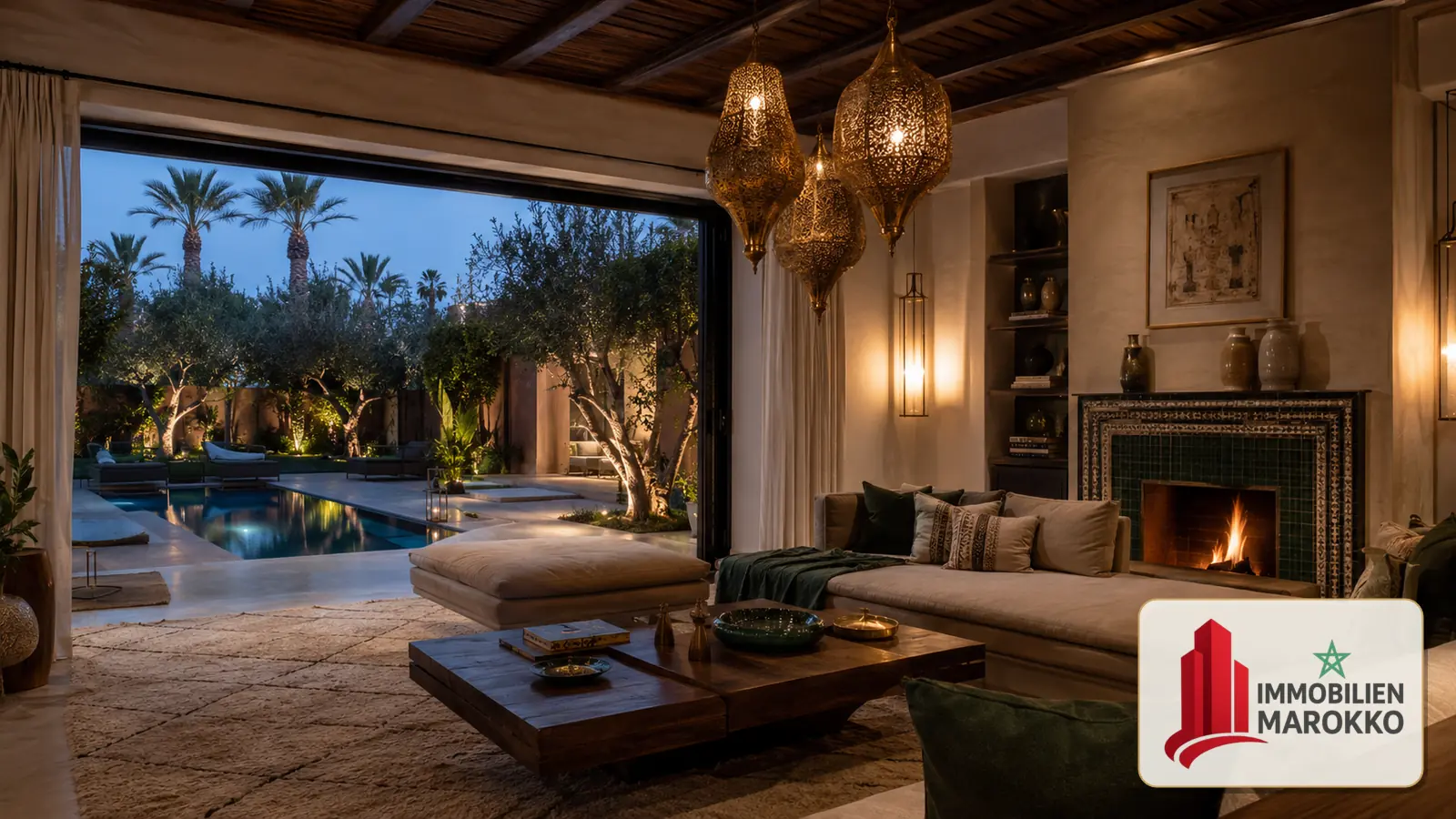
A house in Marrakesh may be an urban family house, a traditional dar in the medina or a detached property in an outlying location. These forms differ significantly in plot, access, privacy, technical systems and care. Before the search, it should be established whether the house will be occupied permanently, used as a second home or let at certain times. Ownership, boundaries, documented existing structures, the roof, pipes, external areas and neighbourhood are then reviewed. A decorative courtyard or garden is an important residential quality, but answers no question about construction condition or ongoing operation.
This page distinguishes a house from an apartment, riad and prestigious villa without relying on inconsistent market descriptions. The specific plot, form of construction and desired everyday life are decisive. DACHMA can coordinate the search profile, viewings, comparison and specialist contacts. Notarial, legal, technical, tax and financial reviews remain with the responsible bodies. Buyers thus receive a more complete picture of responsibility and post-purchase tasks instead of comparing only rooms and features.
Official guidance: ANCFCC – Land register and cadastre . The linked body does not replace an individual review.
Review points
A town house, dar and detached house are distinguished by access, outdoor space, privacy and technical systems. The market description is secondary. A written intended-use profile determines which features are actually required.
Boundaries, access, ownership documents and existing structures are reconciled. Rooftop structures, extensions, courtyards or ancillary rooms require a traceable allocation. The competent specialists assess the documentation and possible unresolved questions.
The roof, drainage, moisture, structure, electrics, water, windows and climate are assessed systematically. In older houses, concealed components and previous alterations may require particular attention. A surveyor prioritises the findings and any need for further investigation.
Vehicle access, parking, noise, shopping and important routes are tested at appropriate times. In the Medina the walking route matters; in outlying locations, the actual drive. The neighbourhood and security concept must suit the planned use.
A house needs inspections even when vacant. Ventilation, cleaning, the roof, garden, security and small repairs are assigned fixed responsibilities. DACHMA can coordinate an individual management plan once the scope and expenditure approvals have been clarified.
Process
For the plan to ‘buy a house in Marrakech’, the intended use, region, property type, timeframe and total costs are recorded in writing.
Determine micro-locations, everyday life, exclusion criteria and realistic alternatives.
Pre-filter information, consolidate appointments and document observations in a traceable manner.
Negotiate terms and have ownership, encumbrances, construction, use and costs reviewed separately.
Coordinate the notary, specialist advisers, bank, deadlines, payment route and handover unambiguously.
Organise keys, the report, utilities, defects, inspections and letting as needed.
State risks realistically
With houses, attractive surfaces, courtyards and furnishings can draw attention away from the roof, services, moisture or undocumented changes. In the Medina, renovation is affected by access and logistics; outside it, utilities, vehicle access and outdoor areas can create additional workload. Plot boundaries and ancillary areas must also belong unambiguously to the purchase. A house does not become suitable solely because its asking price is below that of a villa. Total costs and responsibility are determined for the specific property.
Due diligence and coordination reduce information gaps. They replace neither individual review nor the responsibility of the relevant specialists.
Decision-making in practice
A sound purchase process combines several perspectives. A financially appropriate price is insufficient if ownership, use or condition remains unresolved. Conversely, a legally sound property does not automatically become the right choice if the location, everyday life and ongoing costs do not suit the buyer. Facts, assumptions and personal preferences are therefore documented separately.
Before making a reservation, it should be clear which documents are already available, which reviews remain open and who will undertake them. Every assurance receives a source or remains expressly marked as an assumption. This applies particularly to rental potential, renovation, construction progress, permissions and future infrastructure. Decisions under artificial time pressure do not fit this approach.
DACHMA structures German-language communication, assists with selection and viewings, prepares negotiation and due-diligence questions, and coordinates agreed steps through to handover. The responsibility of external specialists remains visible. The buyer therefore knows who made a statement and what its scope is. This transparency is more important than a blanket promise that everything has been ‘verified’.
For serious candidates, advantages, unresolved points, costs, documents, responsibilities and deadlines are brought together. A decision follows only when material risks are understood. This may mean requesting further documents, commissioning a technical inspection, renegotiating terms or stepping away from a property. Ending the process can also be a good outcome.
Information as at 19 July 2026. The following bodies provide general guidance on the land register, notarial matters, finance or the respective location.
The information provides guidance and does not replace individual notarial, legal, tax, technical or financial advice.
Frequently asked questions
The terms are not always used consistently. A riad is typically organised around a courtyard, but for the purchase the plot, building structure, access and documented use matter. The specific property is more important than the label.
For serious interest, this is advisable. A second appointment can reveal light, noise, routes and outstanding technical points at a different time. The roof and ancillary areas can also be assessed more closely.
Reality, plans and available permit or construction documents are set alongside one another. The responsible specialists assess which documentation is required and sufficient. Statements from the seller are recorded in writing.
Access can affect transport and work processes. This does not mean renovation is impossible, but logistics, specialists, time and required approvals must be clarified realistically before purchase.
That is a matter for negotiation. The inventory should be recorded in writing with its condition, quantity and ownership. Furnishings are considered separately from the purchase of the plot and building.
That depends on the size, outdoor areas, technical systems and vacancy. Inspections, ventilation, cleaning, security and repairs are planned individually. Letting adds further operating tasks.
Read more
Geographical orientation
The cities are positioned using their geographical coordinates. The High Atlas is marked as a landscape region, while Midelt lies farther east at the transition between mountain regions.
Compare all locations Boundary geometry: Natural Earth · no external map trackers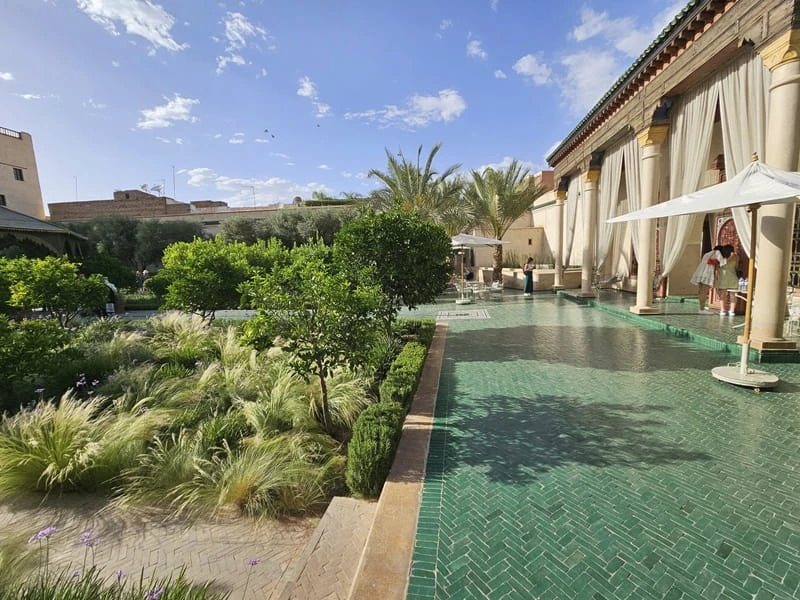
Personal initial consultation
Send your profile in just a few steps – confidentially, in a structured format and with personal attention.
Start an enquiryNon-binding enquiry · No guarantee regarding returns, legal matters or tax · Reply usually within 1–3 working days