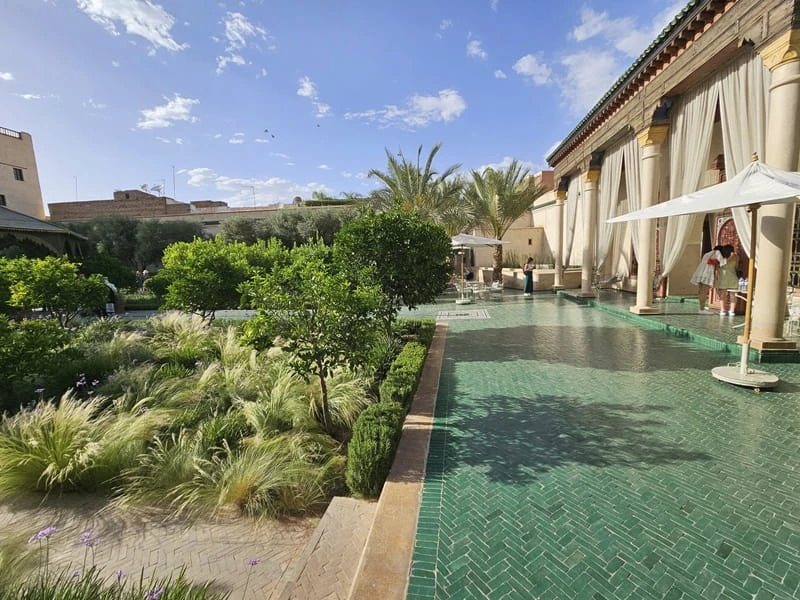
Assess historic houses by access and building fabric

Buying property in a Moroccan Medina

Buying property in a medina: carefully clarify ownership, access, roof, structure, moisture, alterations, neighbourhood and intended use.

Lane in the medina of Marrakesh as context for buying a historic house

Direct answer

A clear explanation of buying property in a Moroccan Medina

Buying property in the medina means assessing a historic building and its close urban surroundings together. Marrakech, Fez, Essaouira, Rabat and Tetouan each have their own building types, access and local processes. A riad or dar may have an impressive courtyard while also raising questions about the roof, structure, moisture, areas or previous alterations. Vehicles often cannot reach the front door; transporting materials and removing waste affect renovation. Atmosphere is important but replaces neither an ownership review nor a specialist condition assessment.

This guide is intended for buyers who consciously wish to live in an old town, use a private holiday home or assess guest accommodation separately. DACHMA can coordinate access, viewings, documents and specialist appointments. The notary clarifies ownership and rights; suitable planners and technicians assess existing structures and possible works. Authorities and specialist advisers decide on permissions, use and taxes. The aim is to bring charm, workload and genuine practicality for everyday life together before commitment.

Official guidance: ANCFCC – Land register and cadastre . The linked body does not replace an individual review.

Review points

Five decisions that make the difference

01

Walk the full access route

The route begins at the vehicle point that can actually be reached, not at the nearest map entry. Alley width, steps, lighting, orientation and carrying routes are documented. This affects everyday life, luggage, emergency access and every subsequent delivery of building materials. A short distance can entail considerable work for heavy deliveries and belongs in cost planning.

02

Allocate ownership and areas unambiguously

Titles, traditional documents, plans and the visible existing structure may use different terms. The courtyard, roof, ancillary rooms, shops or passageways are clarified individually. Shared walls and access rights deserve attention. The Moroccan notary explains which form of ownership applies and which evidence is required for a secure acquisition.

03

Inspect the roof, structure and moisture

Historic houses are not viewed only by their surfaces. Roof waterproofing, drainage, ceilings, cracks, timber, walls, pipes and ventilation require specialist attention. Moisture stains can have several causes. Traditional materials require appropriate repairs; a quick modern seal may conceal or even worsen problems.

04

Plan alterations and logistics in advance

Desired changes to the layout, additional bathrooms, kitchen, technical systems or roof use are discussed with suitable specialists before purchase. Permissions, heritage implications, neighbours, access for tradespeople and material transport can determine time and costs. A detailed schedule of works is more reliable than a blanket renovation promise from the seller.

05

Respect intended use and the neighbourhood

A medina is a place to live and work, not merely a backdrop. Daily routines, the mosque, crafts, markets, guest access and noise are experienced at different times. Anyone wishing to accommodate guests must examine the required procedures, safety and operations separately. Private use, a guest house and short-term letting have different requirements and must not be treated as equivalent.

Process

From the initial objective to a regulated next step

01

Clarify the objective and budget

For the ‘property in the medina’ project, intended use, region, type of property, timeframe and total costs are recorded in writing.

02

Narrow the search area

Determine micro-locations, everyday life, exclusion criteria and realistic alternatives.

03

Listings and viewing

Pre-filter information, consolidate appointments and document observations in a traceable manner.

04

Price and documents

Negotiate terms and have ownership, encumbrances, construction, use and costs reviewed separately.

05

Contract and payment

Coordinate the notary, specialist advisers, bank, deadlines, payment route and handover unambiguously.

06

Handover and management

Organise keys, the report, utilities, defects, inspections and letting as needed.

State risks realistically

What must be clarified before making a commitment

In historic houses, decorative details can obscure substantial technical questions. Concealed moisture, weakened components, unclear areas or informal alterations are not always identified during an initial viewing. Difficult access increases renovation and operating costs. Previous tourist use is not evidence of current permissions or future occupancy. Reserves and specialist review must therefore be greater than for a clearly documented standard apartment.

Professional limitations remain visible

Due diligence and coordination reduce information gaps. They replace neither individual review nor the responsibility of the relevant specialists.

Next step

Submit a qualified enquiry

Choose the city, preferred medina area, private or operational use, room requirements, desired roof and renovation scope. During every viewing, access, the neighbourhood, roof and all levels are documented. DACHMA can follow up title and plan documents and coordinate the notary and technical specialists. Before agreeing a price, a clarified ownership extent, prioritised defect list, works budget and realistic schedule are prepared.

Submit the search profile

Decision-making in practice

Questions before committing: buying property in a Moroccan medina

A sound purchase process combines several perspectives. A financially appropriate price is insufficient if ownership, use or condition remains unresolved. Conversely, a legally sound property does not automatically become the right choice if the location, everyday life and ongoing costs do not suit the buyer. Facts, assumptions and personal preferences are therefore documented separately.

Before making a reservation, it should be clear which documents are already available, which reviews remain open and who will undertake them. Every assurance receives a source or remains expressly marked as an assumption. This applies particularly to rental potential, renovation, construction progress, permissions and future infrastructure. Decisions under artificial time pressure do not fit this approach.

What DACHMA contributes specifically

DACHMA structures German-language communication, assists with selection and viewings, prepares negotiation and due-diligence questions, and coordinates agreed steps through to handover. The responsibility of external specialists remains visible. The buyer therefore knows who made a statement and what its scope is. This transparency is more important than a blanket promise that everything has been ‘verified’.

How a decision is documented

For serious candidates, advantages, unresolved points, costs, documents, responsibilities and deadlines are brought together. A decision follows only when material risks are understood. This may mean requesting further documents, commissioning a technical inspection, renegotiating terms or stepping away from a property. Ending the process can also be a good outcome.

Sources and professional limitations

Information as at 19 July 2026. The following bodies provide general guidance on the land register, notarial matters, finance or the respective location.

The information provides guidance and does not replace individual notarial, legal, tax, technical or financial advice.

Frequently asked questions

Frequently asked questions: buying property in a Moroccan medina

What is the difference between a riad and a dar?

Terms are not always used consistently in the market. What matters are the actual layout, courtyard, areas, ownership and existing building structure.

Can a car reach every house in the Medina?

No. Many houses are accessible only on foot. The exact carrying route is tested before purchase for everyday life, furniture and renovation.

Are moisture and cracks normal in old houses?

They are indicators, not blanket harmless signs of age. Their cause and significance must be assessed by suitable technical specialists.

May I extend the roof or use it as a terrace?

Rights of use, load-bearing capacity and required permits are reviewed for the specific building. Visible use by previous owners is not sufficient.

Can I operate a riad as a guesthouse?

Only after your own legal, technical, tax and operating review. Ownership of a riad is not automatic permission to operate it.

How do I calculate a medina renovation?

A professional schedule of works, local quotations, logistics costs and a reserve form the basis. A blanket figure per square metre is usually insufficient.

Geographical orientation

Choose a Moroccan city to suit your daily life

The cities are positioned using their geographical coordinates. The High Atlas is marked as a landscape region, while Midelt lies farther east at the transition between mountain regions.

Compare all locations Boundary geometry: Natural Earth · no external map trackers
Map of Morocco showing selected cities and the High AtlasGeographically projected orientation map showing Tangier, Tetouan, Rabat, Casablanca, Meknes, Fez, Midelt, Marrakech, Essaouira and Agadir.High AtlasTangierTetouanRabatCasablancaMeknesFezMideltMarrakechEssaouiraAgadir
Moroccan garden with a reflecting pool behind the property enquiry

Personal initial consultation

Ready to find your property in Morocco?

Send your profile in just a few steps – confidentially, in a structured format and with personal attention.

Start an enquiry

Non-binding enquiry · No guarantee regarding returns, legal matters or tax · Reply usually within 1–3 working days

Enquire now!